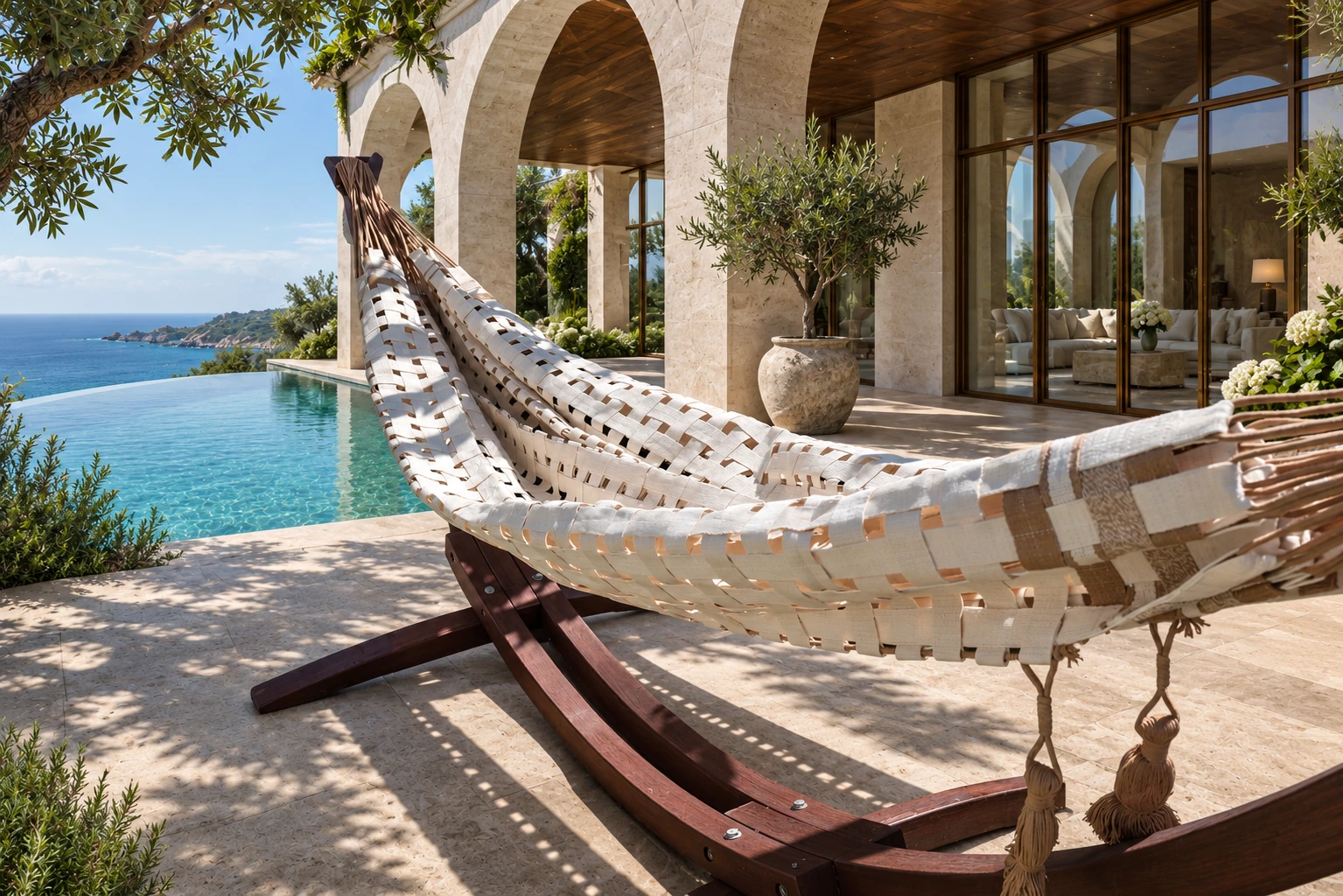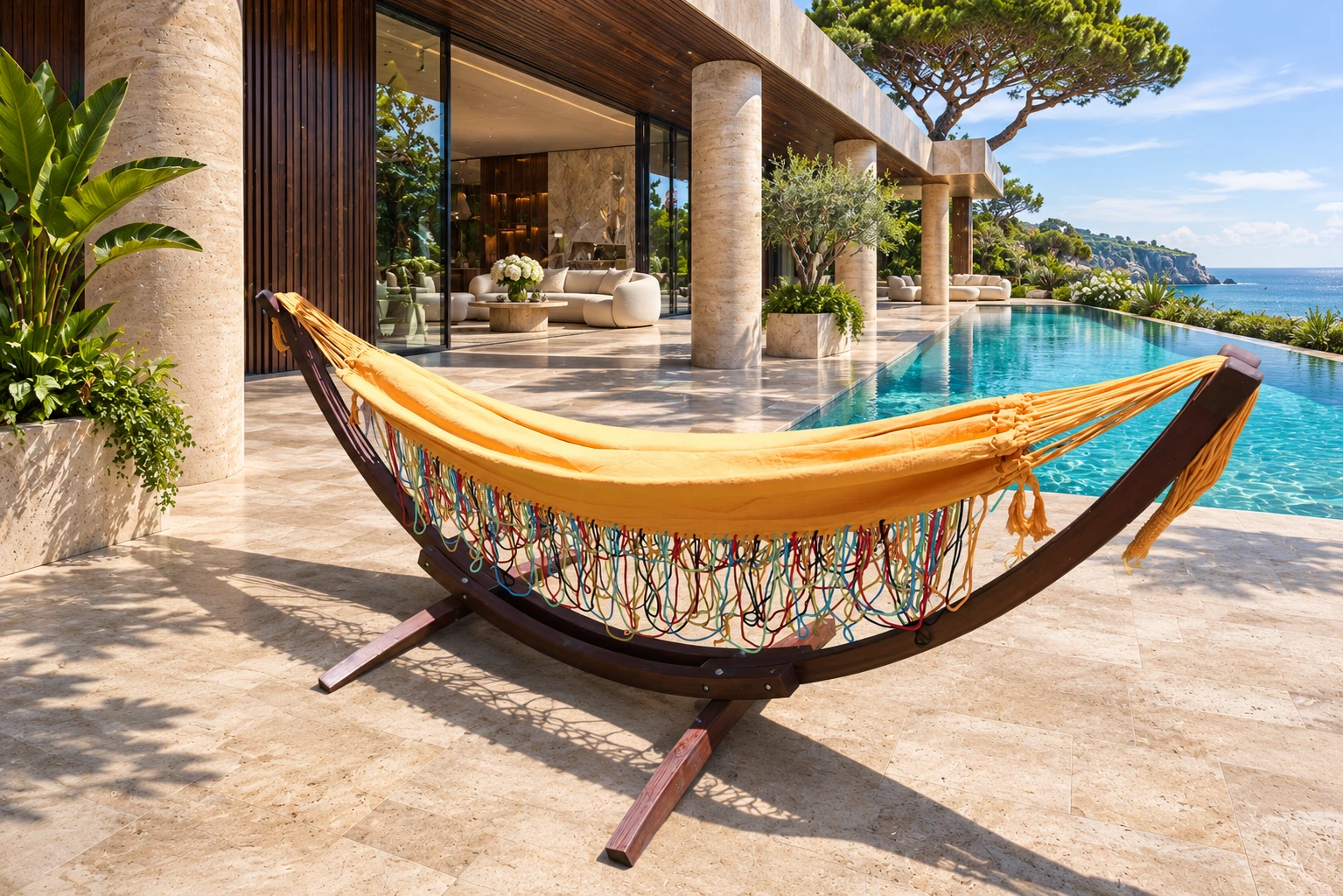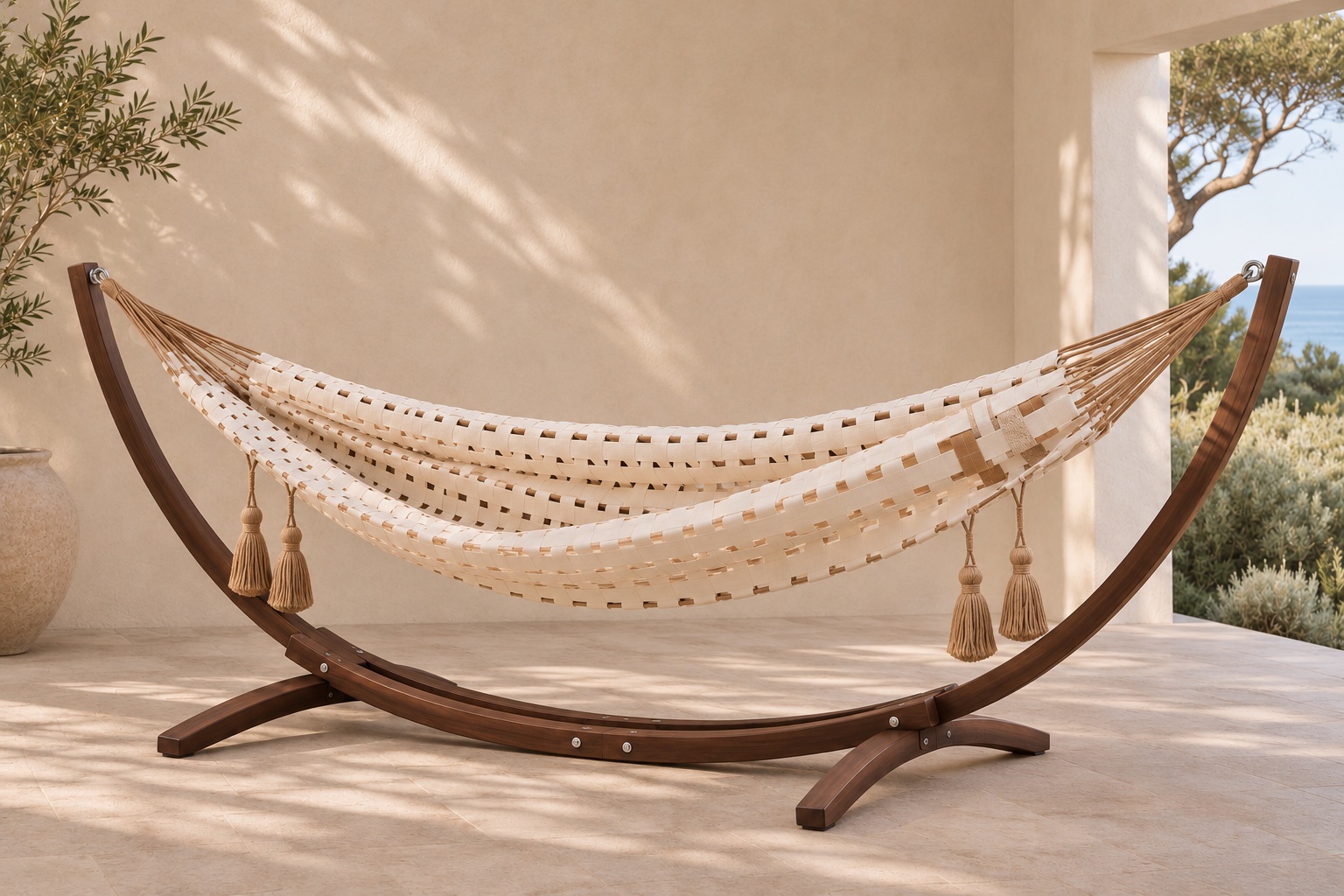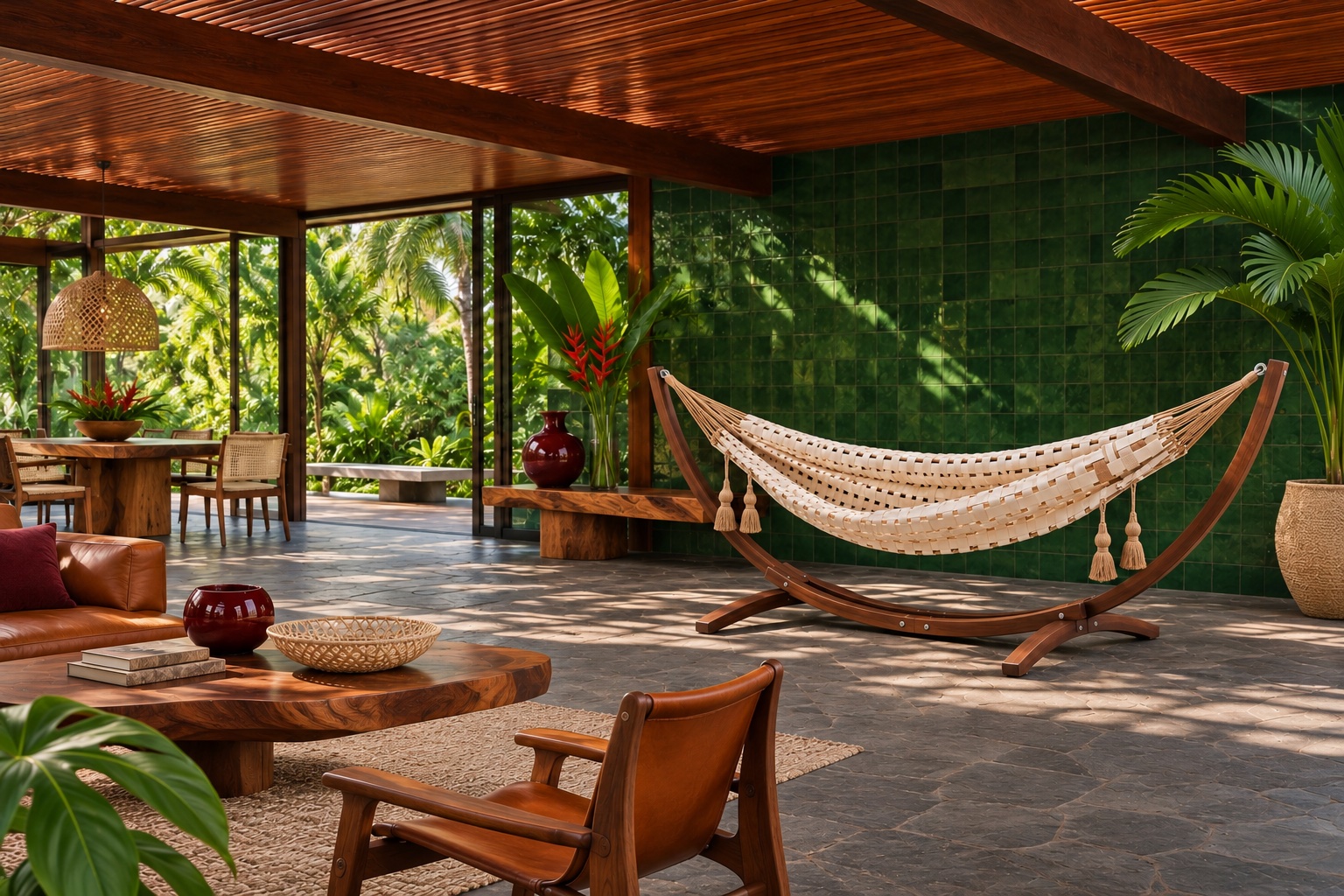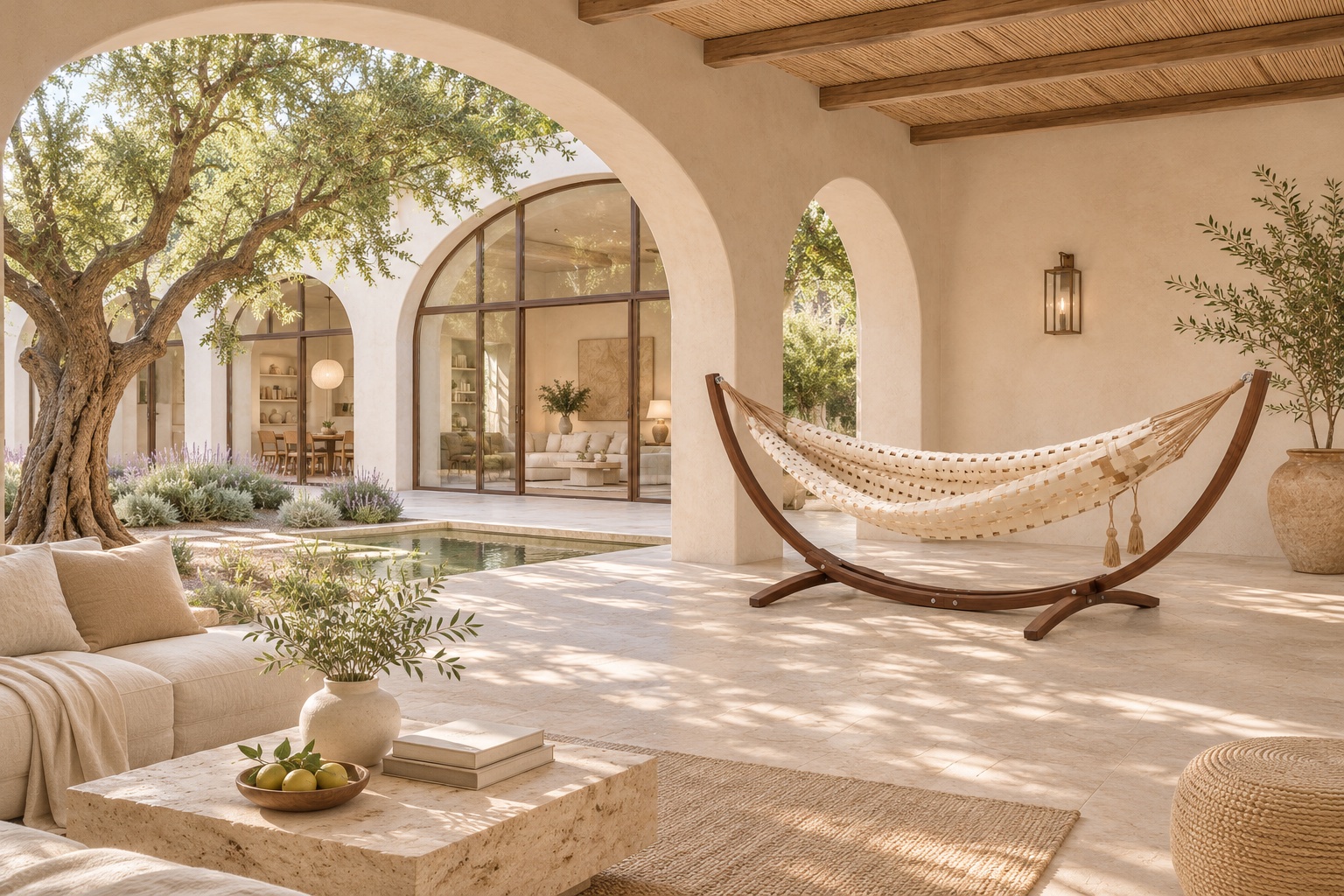
The short version: a Brazilian hammock is a length of woven cotton cloth with no spreader bar, often finished with a hand-made fringe. A Mexican hammock is an open net of fine strings. A Nicaraguan hammock is made from thick, soft cotton cord and often hangs from wooden spreader bars. All three are hand-making traditions. They feel different to lie in and suit different places.
The three traditions at a glance
- Brazilian: woven cotton cloth gathered at each end, with no spreader bar. The body is a continuous textile, so pattern, colour and fringe are part of the design.
- Mexican, often called Mayan or Yucatán: a fine open net of cotton or nylon strings, with no spreader bar. Light, airy and stretchy.
- Nicaraguan: thick cotton cord in a dense weave, commonly hung from wooden spreader bars and trimmed with decorative fringe.
What makes a hammock Brazilian
Brazilian hammocks come from the north-east of Brazil, where the hammock, or rede, is everyday furniture. The cloth is woven first and the suspension cords are attached afterwards, which is why a Brazilian hammock looks and feels like a textile and not like a net. Many are finished with a varanda, the hand-made fringe that runs along each side.
With no spreader bar, the cloth gathers around you a little. Many people lie slightly across the hammock instead of straight along it, which lets the cloth open out flatter.
How Mexican and Nicaraguan hammocks differ
A Mexican hammock is made from many fine strings worked into an open net. Air moves through it freely, which is why it is often chosen for hot, humid weather. The net is see-through, so it shows the room or garden behind it and has no woven pattern of its own.
A Nicaraguan hammock uses much thicker cord. Spreader bars hold it open and flat, which gives it a strong presence on a veranda. A hammock held open by bars sits flatter and feels less enclosing than one without them.
Which one suits your space
- A reading corner, living room or sunroom: a Brazilian hammock, because the woven cloth reads as part of the room. See our notes on planning an indoor hammock.
- A covered veranda: any of the three. Whichever tradition it comes from, keep a cotton hammock out of the rain and out of long hours of direct sun.
- The hottest, most humid spots: an open-net Mexican hammock lets the most air through.
What to check before buying any hammock
- Where and how it was made. A seller should be able to name the maker or the region.
- Material. Cotton, nylon and polyester feel different and age differently.
- Length, width and listed load limit. Measure your space first and allow room for the hammock to sag and swing.
- What is included. Stands and hanging hardware are often sold separately.
- Shipping and returns to your address.
Brazilian hammocks at Peace Emergency
We sell one tradition only: Brazilian cotton hammocks handcrafted by Santa Luzia in São Bento, Paraíba. There are 14 pieces in the collection, with listed lengths of 4.00m to 4.20m and widths of 1.60m to 1.90m. Each product page lists the dimensions, material and maximum load for that model.
The braided Trancê pieces, The Natural, The Terracotta and The Harvest Gold, have an open, sculptural weave. The Trancê design received Recognition of Artisan Excellence in the Southern Cone from the World Crafts Council in 2018. Woven pieces such as The Iracema Heritage have a fuller body with handcrafted fringe.
Orders are dispatched from the Sunshine Coast, Queensland, with free standard shipping within Australia. Each listing is for the hammock only; stands and hanging hardware are not included. The images on our site are digitally styled scenes; contact us if you would like a particular detail confirmed before ordering.
We do not sell Mexican or Nicaraguan hammocks. If one of those suits your space better, the checks above apply just as well. To compare our pieces, start with the Brazilian hammock buyers guide or see the full collection.